
Have you ever noticed oil dripping from your kitchen chimney while cooking?
It can be alarming, especially when oil starts collecting around the filters, oil collector, or even dripping onto the cooking area.
The good news is that oil dripping does not always mean that your chimney has a major mechanical problem. In many cases, it is related to grease buildup, filter condition, cooking habits, or maintenance.
In this guide, we will explain why oil drips from a kitchen chimney, what you can do about it, and how to prevent the problem from happening again.
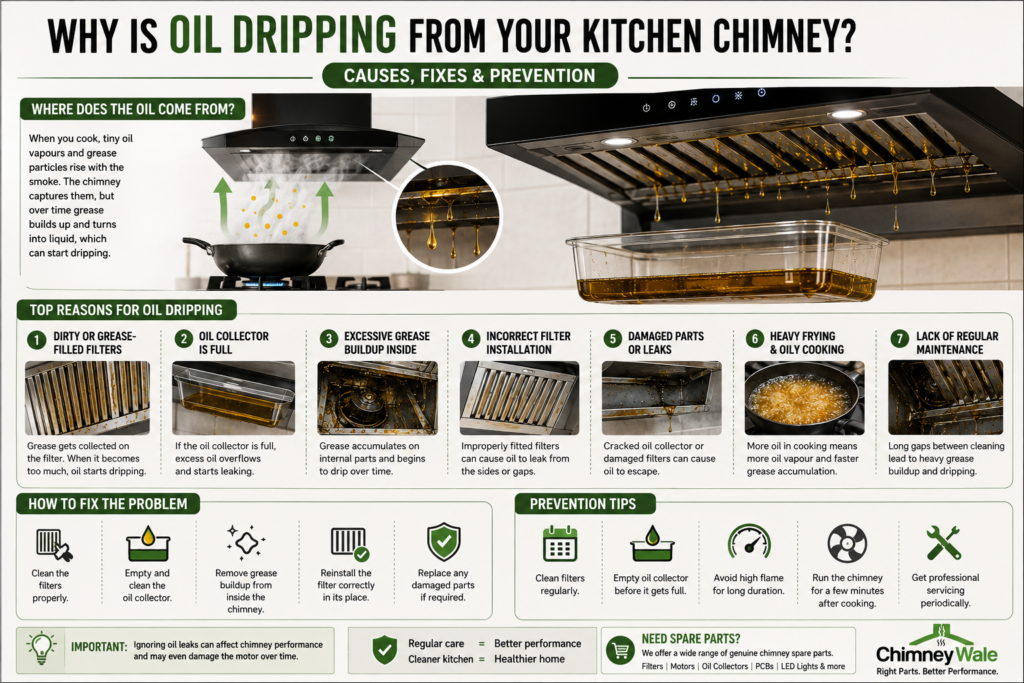
Why Does Oil Collect Inside a Kitchen Chimney?
When you cook, particularly when frying or using a lot of oil, the cooking process releases tiny oil and grease particles into the air.
The chimney draws this air upward.
Some of these grease particles are captured by the chimney’s filtration system. Over time, the accumulated grease can become liquid and move downward.
This is why regular filter cleaning and maintenance are important.
Dirty or Grease-Filled Filters
One of the most common reasons for oil dripping is a heavily greasy filter.
As grease continues to accumulate, the filter can become saturated. Eventually, excess oil may start running down the filter or into other parts of the chimney.
What You Can Do
Clean the filter according to the manufacturer’s recommendations.
If the filter is damaged, heavily deteriorated, or no longer suitable for cleaning, replacement may be necessary.
Oil Collector Is Full
Some kitchen chimneys are equipped with an oil collector or oil cup designed to collect grease and oil.
If the collector is not emptied regularly, it can become full.
Once there is no more space, accumulated oil may overflow or leak.
Simple Solution
Check the oil collector periodically and empty and clean it as recommended by the manufacturer.
Don’t wait until oil starts dripping onto your stove.
Excessive Grease Buildup Inside the Chimney
Oil doesn’t always collect only on the filter.
Over time, grease can accumulate on internal surfaces and around components such as the blower.
When this buildup becomes heavy, accumulated grease may eventually start dripping.
This is one reason why periodic professional cleaning can be useful, particularly for households that cook oily food frequently.
Filter Has Not Been Installed Correctly
If a removable filter is not positioned correctly after cleaning, oil may not flow toward the intended collection area.
Instead, grease can leak from unexpected areas.
Whenever you remove a filter for cleaning, make sure it is correctly reinstalled according to the chimney manufacturer’s instructions.
Oil Collector or Filter Is Damaged
Sometimes the problem isn’t simply dirt.
A cracked oil collector, damaged filter, bent component, or broken mounting point can allow grease to escape.
Inspect the components carefully if you notice oil leaking repeatedly from the same location.
Heavy Frying and Oily Cooking
Your cooking habits can also influence how much grease enters the chimney.
Deep frying, frying spices, grilling, and cooking food at high temperatures can produce significant amounts of oil vapour.
If you regularly prepare oily food, your chimney may require more frequent cleaning than a chimney used mainly for light cooking.
Chimney Has Not Been Maintained for a Long Time
A chimney that hasn’t been cleaned for months—or even years—can accumulate a considerable amount of grease.
Eventually, this buildup can cause oil to drip from the filters and internal areas.
Regular maintenance is therefore much easier than dealing with a heavily contaminated chimney later.
Is Oil Dripping a Sign That the Chimney Is Broken?
Oil dripping is often caused by maintenance-related issues rather than a failed motor or electrical component.
Before assuming that the chimney needs a major repair, check:
- Filters
- Oil collector
- Grease buildup
- Filter installation
- Visible damage
- Duct condition
If cleaning and basic inspection don’t solve the problem, professional servicing may be appropriate.
Can Oil Dripping Affect the Chimney Motor?
Excessive grease accumulation can eventually affect internal components.
If grease reaches areas where it shouldn’t be, it may contribute to mechanical or electrical problems.
A heavily contaminated chimney may also experience reduced airflow and increased load on components.
That’s why persistent oil leakage shouldn’t simply be ignored.
How to Prevent Oil From Dripping From Your Chimney
A few simple habits can significantly reduce the problem.
Clean the filters regularly
Follow the cleaning schedule recommended for your specific chimney.
Empty the oil collector
Don’t allow collected oil to remain inside indefinitely.
Clean grease buildup
Periodic cleaning helps prevent excessive accumulation.
Check the filters after cleaning
Make sure they are installed correctly.
Don’t ignore leaks
If oil starts dripping unexpectedly, investigate the cause early.
Consider professional servicing
Heavy-use kitchens may benefit from periodic inspection and servicing.
What If Cleaning Doesn’t Stop the Oil Leak?
If the chimney continues to leak oil even after cleaning the filters and oil collector, the problem may require further inspection.
Possible causes include:
- Damaged filter
- Cracked oil collector
- Incorrect filter positioning
- Excessive internal grease
- Blocked or poorly designed duct
- Damaged internal components
A qualified technician can inspect the chimney and determine which component is responsible.
Should You Replace the Filter?
Sometimes cleaning is enough.
However, replacement may be appropriate if the filter is:
- Physically damaged
- Corroded
- Deformed
- Extremely difficult to clean
- No longer functioning properly
Always choose a replacement filter compatible with your chimney’s specific model.
Does a Filterless Chimney Have This Problem?
A filterless chimney uses a different design from a conventional filter-based chimney.
However, filterless does not mean maintenance-free.
Grease can still accumulate inside the chimney, and the internal components may require cleaning according to the manufacturer’s recommendations.
The maintenance procedure depends on the specific chimney model.
When Should You Call a Technician?
Consider professional inspection if:
- Oil continues dripping after cleaning.
- The chimney has suddenly become very noisy.
- Suction has significantly decreased.
- The motor behaves abnormally.
- Electrical controls are malfunctioning.
- You notice damaged internal components.
- You suspect grease has reached electrical parts.
Electrical and internal repairs should not be attempted without appropriate technical knowledge.
Final Thoughts
Oil dripping from a kitchen chimney is usually a warning that grease management or maintenance needs attention.
The most common causes include dirty filters, a full oil collector, excessive grease buildup, incorrect filter installation, or damaged components.
Regular cleaning and timely maintenance can prevent small problems from becoming expensive repairs.
If your chimney requires a replacement filter, oil collector, motor, PCB, LED light, or another spare part, always verify the brand, model, dimensions, and compatibility before purchasing.
Frequently Asked Questions
Why is my kitchen chimney dripping oil?
The most common causes include a dirty filter, full oil collector, excessive grease buildup, incorrectly installed filter, or damaged components.
How often should I clean my chimney filter?
The frequency depends on the type of filter and how heavily you use the chimney. Oily and frequent cooking generally requires more frequent cleaning. Always follow the manufacturer’s recommendations.
Can I stop oil dripping by cleaning the filter?
If grease buildup is the cause, cleaning the filter and oil collection area may solve the problem. If the leakage continues, the chimney should be inspected for other causes.
Is oil dripping dangerous?
Oil accumulation should not be ignored. Excess grease can affect chimney performance and may contaminate internal components. Clean the chimney promptly and seek professional inspection if the problem persists.
Do filterless chimneys need cleaning?
Yes. Filterless chimneys also require maintenance. Their internal cleaning requirements vary by model, so follow the manufacturer’s instructions.
For more information about kitchen chimney maintenance, installation and troubleshooting, you may also read:
How to Clean Kitchen Chimney Filters at Home
How Often Should You Clean Your Kitchen Chimney? A Complete Maintenance Guide