
When choosing a kitchen chimney, one important decision is whether to install a duct chimney or a ductless chimney. Both options are designed to improve kitchen air quality, but they work differently and have different installation requirements.
In this guide, we will compare duct and ductless chimneys, discuss their advantages and limitations, and help you choose the right option for your kitchen.
What is a Duct Chimney?
A duct chimney removes smoke, grease, heat, and cooking odors by passing the air through a duct pipe and releasing it outside the house. These chimneys are commonly used in modern Indian kitchens because they provide efficient smoke extraction.
What is a Ductless Chimney?
A ductless chimney, also known as a recirculating chimney, filters the air and then releases it back into the kitchen. It does not require an external duct pipe, making installation easier in some situations.
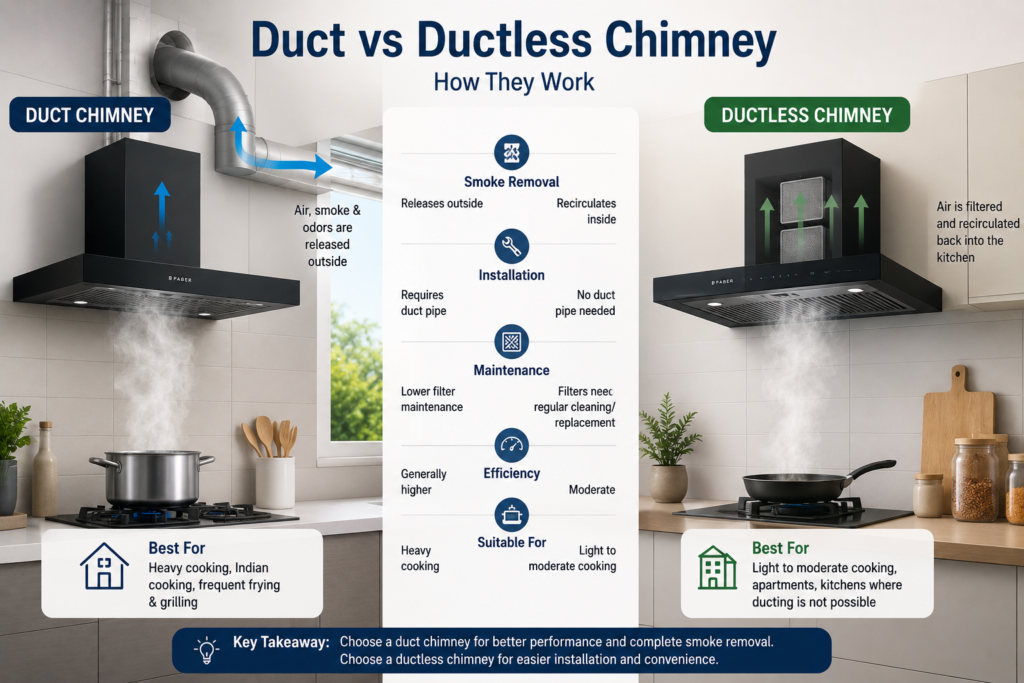
Duct Vs Ductless Chimney?
| Feature | Duct Chimney | Ductless Chimney |
|---|---|---|
| Odor Removal | More effective | Less effective |
| Smoke Removal | Releases outside | Recirculates air |
| Installation | Requires duct pipe | No duct pipe needed |
| Maintenance | Lower filter maintenance | Filters need regular replacement |
| Efficiency | Generally higher | Moderate |
| Suitable For | Heavy cooking | Light to moderate cooking |
Advantages of Duct Chimney
Better smoke and odor removal
• Suitable for Indian cooking styles
• Efficient grease extraction
• Preferred for heavy cooking
Advantages of Ductless Chimney
Easier installation
• Suitable where ducting is difficult
• No need for external outlet
• Can be useful in apartments with installation restrictions
Which one is better for Indian Kitchens?
For most Indian households that frequently use oil, spices, frying, and grilling, duct chimneys are generally preferred because they remove smoke and odors more effectively.
Ductless chimneys may be suitable for users who have installation limitations or lighter cooking requirements.
Factors to Consider before Choosing
Kitchen layout
• Cooking habits
• Installation possibilities
• Maintenance requirements
• Available budget
Conclusion
Both duct and ductless chimneys have their own advantages. Duct chimneys are often preferred for their stronger smoke extraction capabilities, while ductless chimneys offer flexibility where duct installation is difficult.
Choosing the right option depends on your kitchen setup, cooking style, and maintenance preferences.
Frequently Asked Questions
Which chimney is better, duct or ductless?
For most Indian kitchens, duct chimneys are generally preferred because they provide more effective smoke and odor removal.
Does a ductless chimney need filter replacement?
Yes. Ductless chimneys typically use filters that require periodic cleaning or replacement.
Can a ductless chimney remove smoke completely?
Ductless chimneys can reduce smoke and odors, but they usually do not match the efficiency of a properly installed duct chimney.
If you are still deciding on chimney size, you can also read our Kitchen Chimney Size Guide for Indian Homes.
You may also find our comparison article Filterless vs Filter Chimney: Which One is Better helpful before making a purchase decision.