
A kitchen chimney is designed to remove smoke, grease, and cooking odors, helping to keep your kitchen clean and comfortable. However, many homeowners notice that their chimney does not remove smoke as effectively as it did when it was new.
Poor smoke extraction can result from several factors, including clogged filters, improper installation, insufficient suction power, or blocked ducts. In this guide, we will discuss the most common causes and practical solutions to help restore your chimney’s performance.
How Does a Kitchen Chimney Remove Smoke?
A kitchen chimney works by creating suction that draws smoke, steam, grease particles, and cooking odors through filters and, in ducted models, expels them outside the home. Efficient smoke removal depends on proper installation, regular maintenance, and selecting a chimney with suitable suction power.
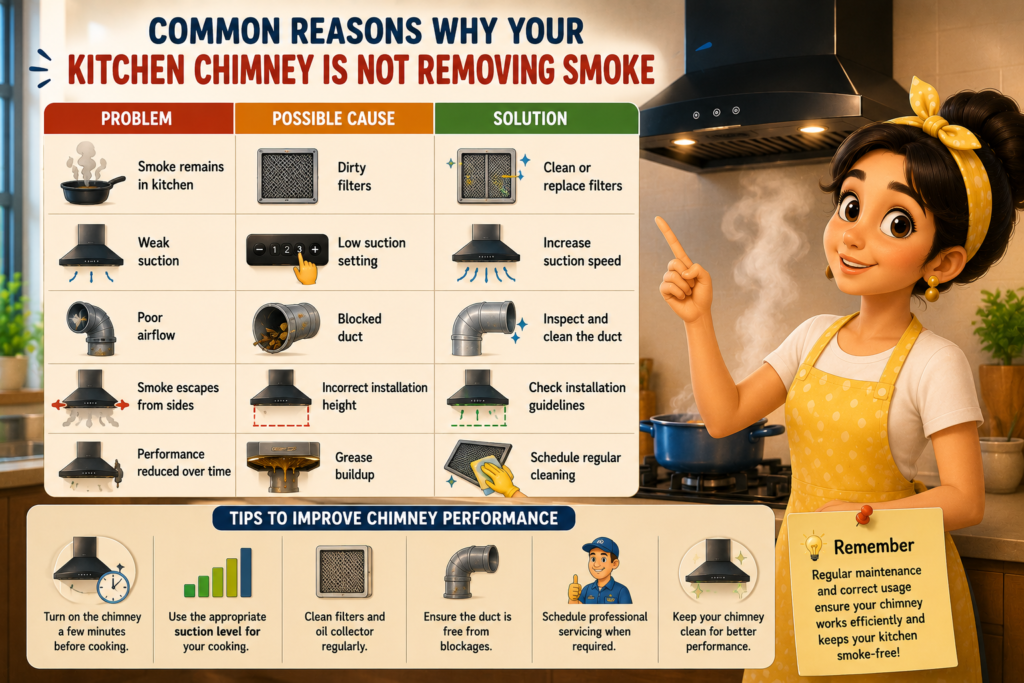
Common Reasons Why Your Chimney Is Not Removing Smoke
| Problem | Possible Cause | Solution |
|---|---|---|
| Smoke remains in kitchen | Dirty filters | Clean or replace filters |
| Weak suction | Low suction setting | Increase suction speed |
| Poor Airflow | Blocked Duct | Inspect and Clean the Duct |
| Smoke escapes from sides | Incorrect Installation heights | Check Installations guidelines |
| Performance reduced over time | Grease build up | Schedule regular cleaning |
Signs Your Chimney Needs Attention
- Smoke lingers in the kitchen after cooking.
- Strong cooking odors remain even when the chimney is running.
- Grease starts collecting on kitchen cabinets or walls.
- Suction feels weaker than before.
- The chimney makes unusual sounds during operation.
Tips to Improve Chimney Performance
- Turn on the chimney a few minutes before cooking.
- Use the appropriate suction level for your cooking style.
- Clean filters and the oil collector regularly.
- Ensure the duct is free from blockages.
- Schedule professional servicing when required.
When Should You Call a Professional?
If regular cleaning does not improve performance, or if you notice unusual vibrations, electrical issues, or a sudden drop in suction despite proper maintenance, it is advisable to contact an authorized service technician for inspection.
Can an Old Chimney Lose Suction?
Over time, grease buildup, worn components, or poor maintenance can reduce a chimney’s effectiveness. Regular servicing and timely replacement of worn parts, when recommended by the manufacturer, can help maintain performance.
Conclusion
A kitchen chimney that does not remove smoke properly can often be restored through regular maintenance and correct usage. Cleaning filters, checking the duct, and using the appropriate suction setting are simple steps that can significantly improve performance. If problems continue after basic maintenance, professional servicing may be the best solution.
Frequently Asked Questions
Why does smoke remain in my kitchen even when the chimney is on?
This may be caused by dirty filters, insufficient suction, blocked ducts, or incorrect installation.
Can dirty filters reduce chimney performance?
Yes. Grease buildup on filters can restrict airflow and reduce suction efficiency.
How can I improve my chimney’s suction?
Clean the filters, empty the oil collector, inspect the duct, and use the appropriate suction level while cooking.
Learn how to maintain your chimney by reading our guide on How Often Should You Clean Your Kitchen Chimney?
You may also find our article How Much Suction Power is Required for an Indian Kitchen? helpful if you’re planning to upgrade your chimney.