
Modern kitchen chimneys often come with touch control panels that make operation simple and elegant. With just a tap, you can adjust the suction speed, switch on the LED lights, or activate the auto-clean function.
However, one of the most common complaints from homeowners is that the touch panel suddenly stops responding or works intermittently.
If your kitchen chimney touch panel is not working properly, don’t panic. In many cases, the issue can be identified and resolved without replacing the entire chimney.
In this guide, we’ll discuss the common causes, possible solutions, and maintenance tips to keep your chimney’s touch panel working smoothly.
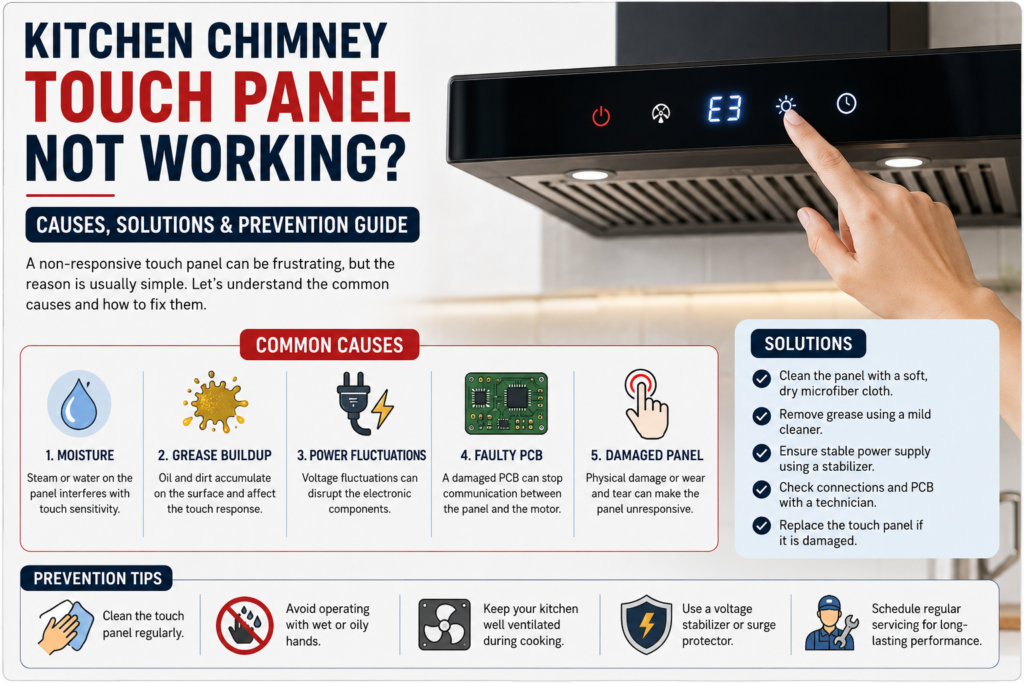
Common Signs of a Faulty Touch Panel
Your chimney may have a touch panel issue if you notice any of the following:
- Buttons do not respond when touched
- Some buttons work while others do not
- The chimney turns on or off automatically
- The display is blank
- LED indicators flickers continously
- Touch controls work only occasionally
Moisture on the Touch Panel
One of the most common reasons for touch panel malfunction is moisture.
Steam generated while cooking can accumulate on the glass panel, especially in poorly ventilated kitchens.
Solution
- Wipe the touch panel with a clean, dry microfiber cloth.
- Avoid operating the chimney with wet hands.
- Improve kitchen ventilation during cooking.
Grease Buildup on the Glass Surface
Over time, oil vapours leave a thin layer of grease on the touch panel.
This grease may reduce the panel’s sensitivity and affect its performance.
Solution
Follow the cleaning instructions recommended by the manufacturer.
Clean the glass surface regularly using a soft cloth.
Avoid harsh chemicals or abrasive scrubbers.
Loose Electrical Connection
If the touch panel receives an unstable electrical connection, it may stop responding completely.
This usually requires inspection by a qualified technician.
Power Fluctuations
Frequent voltage fluctuations can affect electronic components, including the touch control panel and PCB.
Using a surge protector or voltage stabilizer in areas with unstable electricity can help reduce this risk.
Faulty PCB (Control Board)
The touch panel communicates with the chimney through the PCB (Printed Circuit Board).
If the PCB becomes damaged, the touch controls may stop functioning even though the chimney receives power.
Typical signs include:
- Blank display
- Random beeping
- Unresponsive controls
- Chimney not starting
Damaged Touch Panel
After years of use, the touch panel itself may develop internal faults.
Physical impact, excessive moisture, or ageing can eventually affect its performance.
If cleaning and basic troubleshooting do not resolve the issue, the touch panel may need replacement.
Can You Repair a Touch Panel Yourself?
Basic cleaning and checking for visible moisture can be done safely.
However, opening the chimney or handling electrical components should only be done if you have the necessary technical knowledge. Incorrect handling may damage the appliance or create safety risks.
How to Prevent Touch Panel Problems
Follow these simple maintenance tips:
- Clean the glass panel regularly.
- Avoid pressing the panel with oily or wet fingers.
- Protect the chimney from power surges.
- Keep the kitchen well ventilated.
- Schedule periodic chimney servicing.
- Address unusual behaviour early before it becomes a major fault.
When Should You Replace the Touch Panel?
You may need to replace the touch panel if:
- Multiple buttons have stopped working.
- The display remains blank.
- The panel responds randomly.
- The PCB has been tested and found to be working correctly.
- Physical damage is visible on the control panel.
Always ensure that the replacement touch panel is compatible with your chimney’s brand and model.
Final Thoughts
A non-responsive touch panel does not always mean your entire kitchen chimney has failed. In many cases, the problem is caused by moisture, grease buildup, power fluctuations, or a faulty PCB.
Regular cleaning and timely maintenance can help prevent these issues and extend the life of your chimney.
If your chimney requires a compatible touch panel, PCB, motor, filter, LED light, or other genuine spare parts, choosing the correct replacement for your specific chimney model is essential for reliable performance.
Frequently Asked Questions
Why is my kitchen chimney touch panel not responding?
Common reasons include moisture, grease buildup, power fluctuations, loose wiring, or a faulty PCB.
Can a power cut damage the touch panel?
Repeated voltage fluctuations or electrical surges may affect electronic components such as the touch panel or PCB.
Should I replace only the touch panel or the entire chimney?
In many cases, replacing the faulty touch panel or related electronic component is sufficient. The rest of the chimney can continue to work normally if it is in good condition.
Related Articles
To learn more about kitchen chimney maintenance and troubleshooting, you may also find these guides helpful:
- Kitchen Chimney Noise Problem: Causes and Solutions
- Why Is My Kitchen Chimney Not Removing Smoke Properly? Causes and Solutions